Kitchen organization habits often pass down without question. Plates go on cabinet shelves, glasses sit above them, and drawers handle utensils. Yet one simple shift in plate storage has been quietly changing how functional kitchens operate. Placing plates in drawers instead of overhead cabinets is no longer unusual—it’s a practical adjustment that improves safety, comfort, and efficiency.
This storage method may feel unexpected at first, but it addresses several everyday kitchen problems at once. From reducing physical strain to making better use of available space, drawer-based plate storage offers clear advantages that are hard to ignore.
Why Drawers Make More Sense for Plates
1. Improved Safety
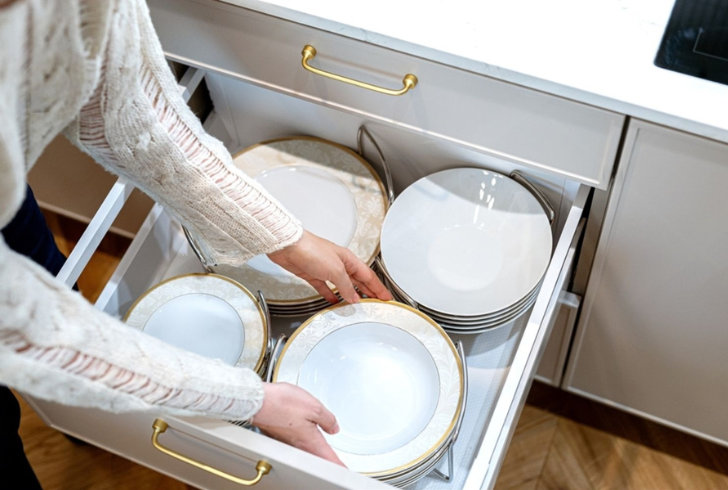
Freepik | Store heavy plates in lower drawers and light items up high for safety.
Stacks of plates carry real weight. Storing them above shoulder level increases the chance of slips, cracked dishes, or injuries. Lower drawers reduce that risk by keeping heavy items within easy reach. Light items such as glassware, baking tools, or storage containers are safer choices for higher shelves.
2. Better Use of Space
Cabinet shelves often waste vertical room due to fixed spacing. Deep drawers, however, make full use of available depth and height. Pull-out access also means nothing gets lost in the back. Many kitchens add wooden pegs inside drawers to keep stacks separated and steady, which helps maintain order without clutter.
3. Faster Dish Handling
Placing plates in drawers near the dishwasher cuts down on the effort required to unload dishes. Transfers are quicker and more ergonomic when dishes are stored at waist level or below. This reduces strain on the back and shoulders, making daily tasks easier and less tiring.
4. Cleaner Visual Appeal
Everyday plates do not need to be on display, especially in open shelving or glass-front cabinets. Reserving visible areas for decorative items such as crystal glasses, decanters, or cutting boards keeps the kitchen looking tidy and purposeful. Storing plates in drawers keeps the visual focus on items that contribute to the kitchen’s aesthetic appeal.
5. Easier Access for Children
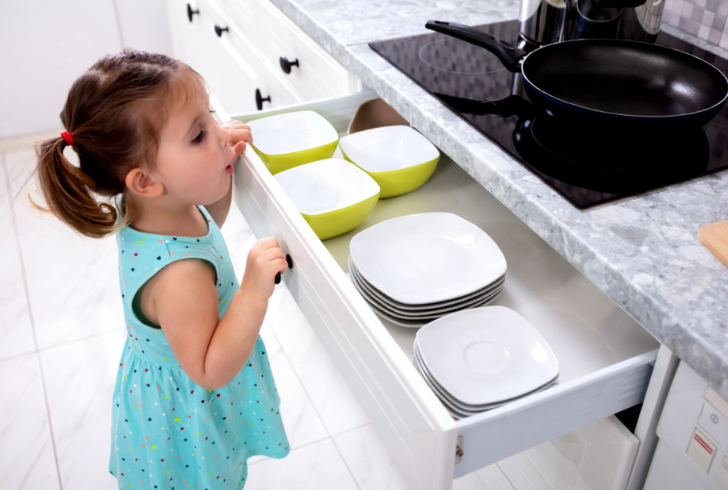
Freepik | Lower drawers give kids safe access to dishes, fostering independence and safety.
Lower drawers are also practical for households with children. Plates and bowls stored at a reachable height encourage independence and reduce the need for kids to climb onto counters.
Children are more likely to participate in setting the table when items are accessible, creating a safer and more functional kitchen environment.
A Practical Update Worth Considering
Reworking plate storage does not require a full kitchen overhaul. It simply involves rethinking where heavy, often-used items belong. Drawers offer accessibility, safety, and smarter use of space while keeping the kitchen organized and comfortable for daily use.
Placing plates in drawers aligns with how kitchens are actually used. The setup supports safety, saves time, and keeps the space visually balanced. Small adjustments like this can make a noticeable difference, proving that better kitchen design often starts with practical decisions rather than tradition.