5 Habits That Helped Jane Goodall Stay ‘Fit as a Fiddle’ for Over 90 Years
Jane Goodall, the world’s most celebrated primatologist and conservation icon, passed away peacefully at 91 while on a speaking tour in Los Angeles. Her long and active life reflected not just passion for her work, but a lifestyle built on mindful choices and an unshakable sense of purpose. Even in her final months, Goodall was still writing, speaking, and inspiring millions — proving that age never has to slow down curiosity or commitment.
Her approach to health wasn’t rooted in luxury wellness trends but in daily practices that nurtured both mind and body. Here’s a closer look at the lifestyle habits that kept Jane Goodall “fit as a fiddle” for nearly a century.
1. Choosing a Plant-Based Diet
Goodall had been committed to a plant-based lifestyle for over five decades. In a 2017 essay, she described the moment she gave up meat after realizing, as she wrote, “this represents fear, pain, death.” That instant shift to a plant-based diet, she said, made her feel “lighter” and more energetic.
In an interview with “The National” earlier this year, she explained that her vegan diet started from ethical reasons but quickly proved beneficial to her health. “Our gut is not made to eat heavy meat,” she said, highlighting the digestive issues linked to animal-based diets.
Goodall often emphasized that factory-farmed animals endure cruel conditions, calling it “absolutely terrible.” She proudly shared, “I’m vegan and I’m fit as a fiddle.”
Research continues to back her choices. A 2021 study from the University of Naples linked plant-rich diets to lower heart disease risk, while a 2022 University of Bergen study found that eating more beans, whole grains, and nuts could extend life expectancy by up to a decade.
2. Staying Purposeful and Working Relentlessly
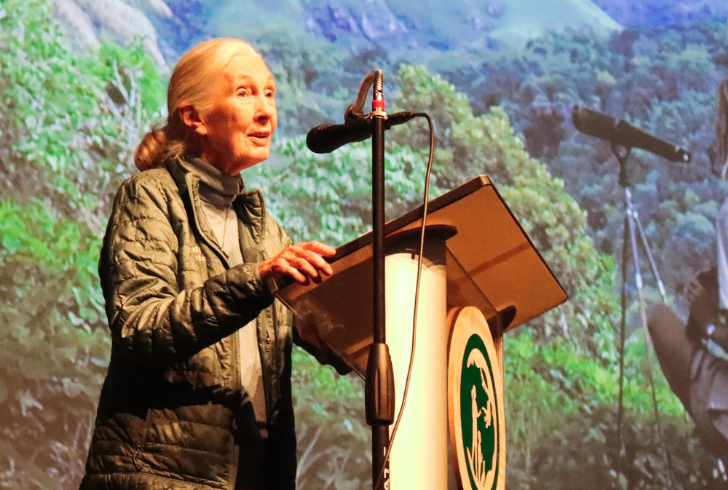
Instagram | laclimateweek | Work wasn’t a chore for Goodall—it was her lifeline, requiring her to travel and speak 300 days yearly.
Work wasn’t a chore for Goodall — it was her lifeline. She told “The Cut” in 2017 that she spent “about 300 days a year on the road,” speaking, teaching, and meeting people.
She once said she had “no time for hobbies” and that weekends and holidays didn’t exist for her. Every day was filled with emails, interviews, and lectures — all driven by a deep sense of mission.
Experts agree that maintaining a sense of purpose in later years supports both mental and emotional well-being. Dr. Shai Efrati of Tel Aviv University noted that continuing to work or pursue meaningful projects can protect brain health and provide a sense of fulfillment.
3. Keeping the Mind Curious
Goodall often said that learning something new each day was essential. Speaking on the “Call Her Daddy” podcast with Alex Cooper, she admitted there isn’t a “favorite part” of aging, but added, “The longer you live, the more you learn. I don’t like a day that I don’t learn something.”
That mindset — the constant desire to expand knowledge — is known to keep the brain agile. Jason Shepherd, a neurobiology professor at the University of Utah, explained that trying new things encourages brain plasticity and helps maintain cognitive strength as we age.
For Goodall, learning wasn’t confined to books or lectures — it was an everyday experience, whether in conversation or observation.
4. Staying Calm and Centered Under Pressure
Despite her packed schedule, Goodall rarely let stress consume her. “I’m able to concentrate on what’s happening right now,” she told “The Cut.” “If one’s calm, then it’s easier to deal with whatever the problem is.”
She admitted that flight delays or travel mishaps could be stressful, but she preferred to find practical solutions instead of frustration, saying, “Maybe the solution is just that it wasn’t meant to happen.”
Studies support this mindset. Chronic stress is known to weaken immunity and increase cardiovascular risks. Longevity researchers from LongeviQuest found that centenarians often share one key trait — they don’t worry about things they can’t control. As CEO Ben Meyers explained, “They’ve enjoyed their lives, and they’re happy to still be here.”
5. Finding Peace in Nature
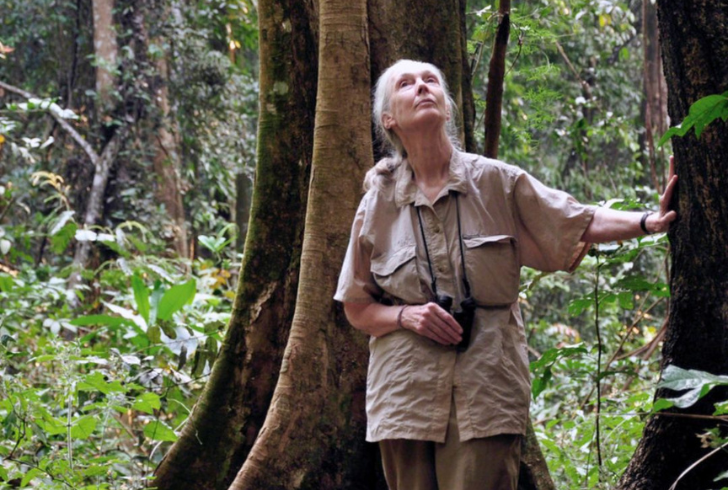
Instagram | janegoodallinst | Nature is home to Jane Goodall, who values being outside more than simply viewing the scenery.
For Jane Goodall, nature wasn’t just scenery — it was home. “A happy day for me is if I can be out in nature somewhere,” she told “Reader’s Digest” in 2024. Even while traveling, she looked for small patches of green: “If I go to a hotel and there’s one tree, I’ll move my bed just to see it.”
She described her days among chimpanzees in Tanzania as deeply spiritual. Speaking with Cooper, she said, “When I was alone, it was just — I was part of that world, not separated from it.”
Science reinforces the benefits of time outdoors — from improved memory to reduced blood pressure and inflammation. For Goodall, it was more than health; it was connection, grounding her through decades of work and travel.
The Enduring Lesson from Jane Goodall’s Life
Jane Goodall’s longevity wasn’t the result of chance. Her life was shaped by choices that nurtured physical health, emotional peace, and mental curiosity. From her plant-based diet to her love for nature and her tireless dedication to purpose, she demonstrated that a fulfilled life is built on alignment — between what we believe, what we do, and how we care for ourselves.
Her story is a reminder that vitality doesn’t come from slowing down — it comes from staying connected to what makes life meaningful.